
A CREATIVE PRACTICE. A CURIOUS MIND.

A little more
present.
One stitch
at a time.

Knitting, curiosity, and the small rituals
that bring us back to ourselves.

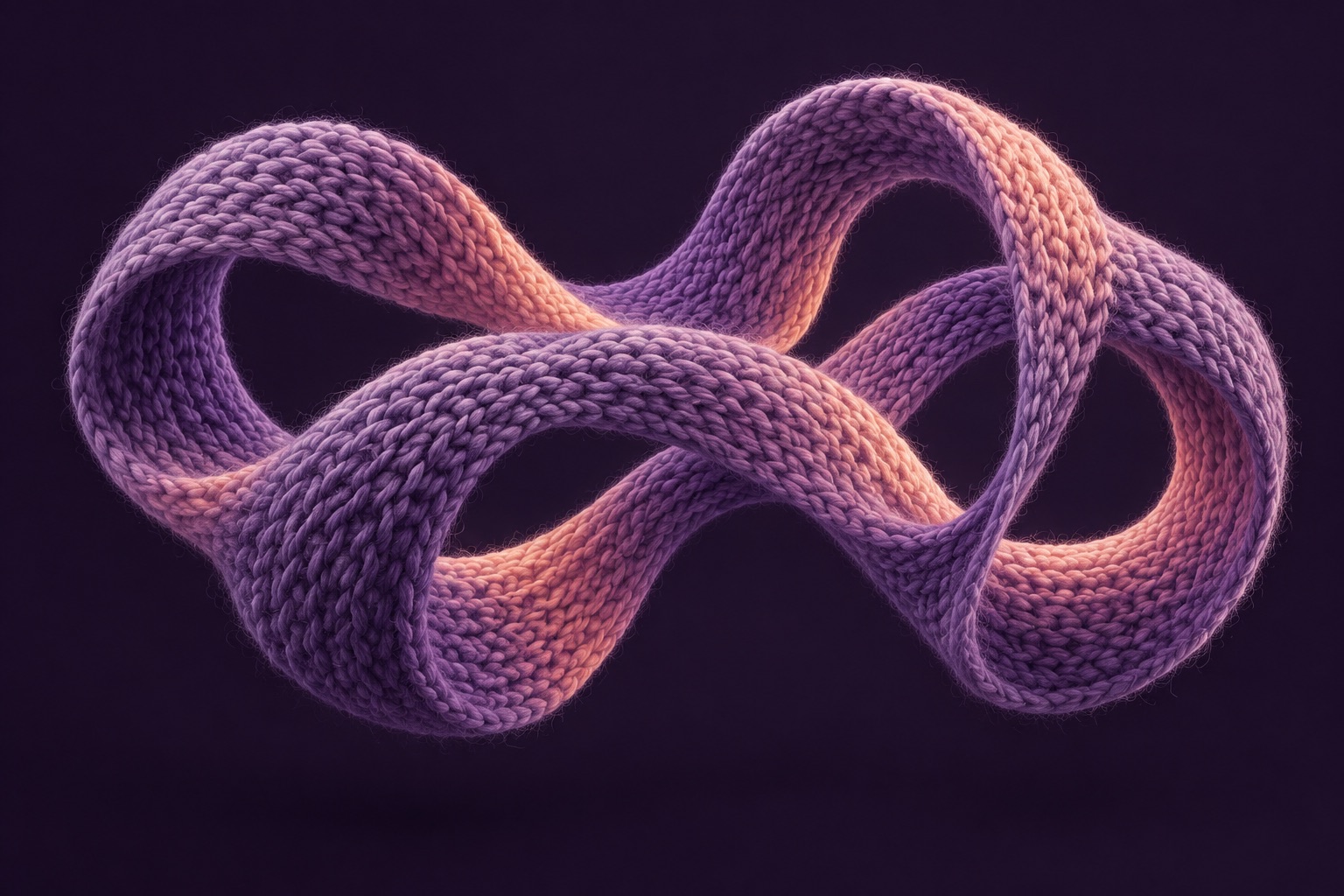
Sculptural loops of violet and peach knitted wool, an abstract expression of connection
ONE THREAD. MANY CONNECTIONS.01 / NEUROKNIT
Made with curiosity. Practiced at your pace.Unwind a little

01 / A MOMENT FOR YOU

No perfect stitches.
Just a little space.

You don’t have to finish something to make time for yourself. Pick up a familiar project, hold a little yarn, or simply notice the feeling of your hands at rest.

These are suggested practice lengths, not clinically tested doses.

THE KNITTING PAUSEReady when you are
Session length
02:00A LITTLE TIME, JUST FOR YOU

Come as you are.

Let the next few minutes be about the experience, not what you make.

Optional row counter
0

No scores. No streaks. Your session stays in this tab and clears on refresh.

02 / WHERE CRAFT MEETS CURIOSITY

A thread worth
exploring.

What makes a simple creative practice feel meaningful?
Start with three ways of looking at it.

DRAG TO TURN · CONCEPTUAL STUDY
01

Find your own rhythm.

The repetition of a familiar stitch gives your hands a simple sequence to return to. There is no ideal pace. Find one that feels comfortable.

TRY THIS · Notice the next three stitches without trying to make them identical.

A visual metaphor for the practice—not a brain scan or a measure of its effects.

CURIOUS, WITH CARE

What the research
can—and can’t—tell us.

Promising observations deserve thoughtful questions.
Association alone does not establish cause.

Knitting & reported wellbeingRiley, Corkhill & Morris · 2013+

An online survey of 3,545 knitters found an association between knitting frequency and self-reported calm and happiness. Participants came from a self-selected knitting community.

The limit: This was observational, not a treatment trial. It does not prove that knitting caused the reported benefits or validate these exercises.

Read the original study ↗
Creative activity & everyday wellbeingKeyes and colleagues · 2024+

An analysis of 7,182 adults in England found associations between arts-and-crafts participation and some measures of subjective wellbeing.

The limit: The study covered many crafts. Observational associations do not show that knitting treats stress or a mental health condition.

Read the original study ↗

NeuroKnit offers general wellbeing and education, not therapy or medical advice.

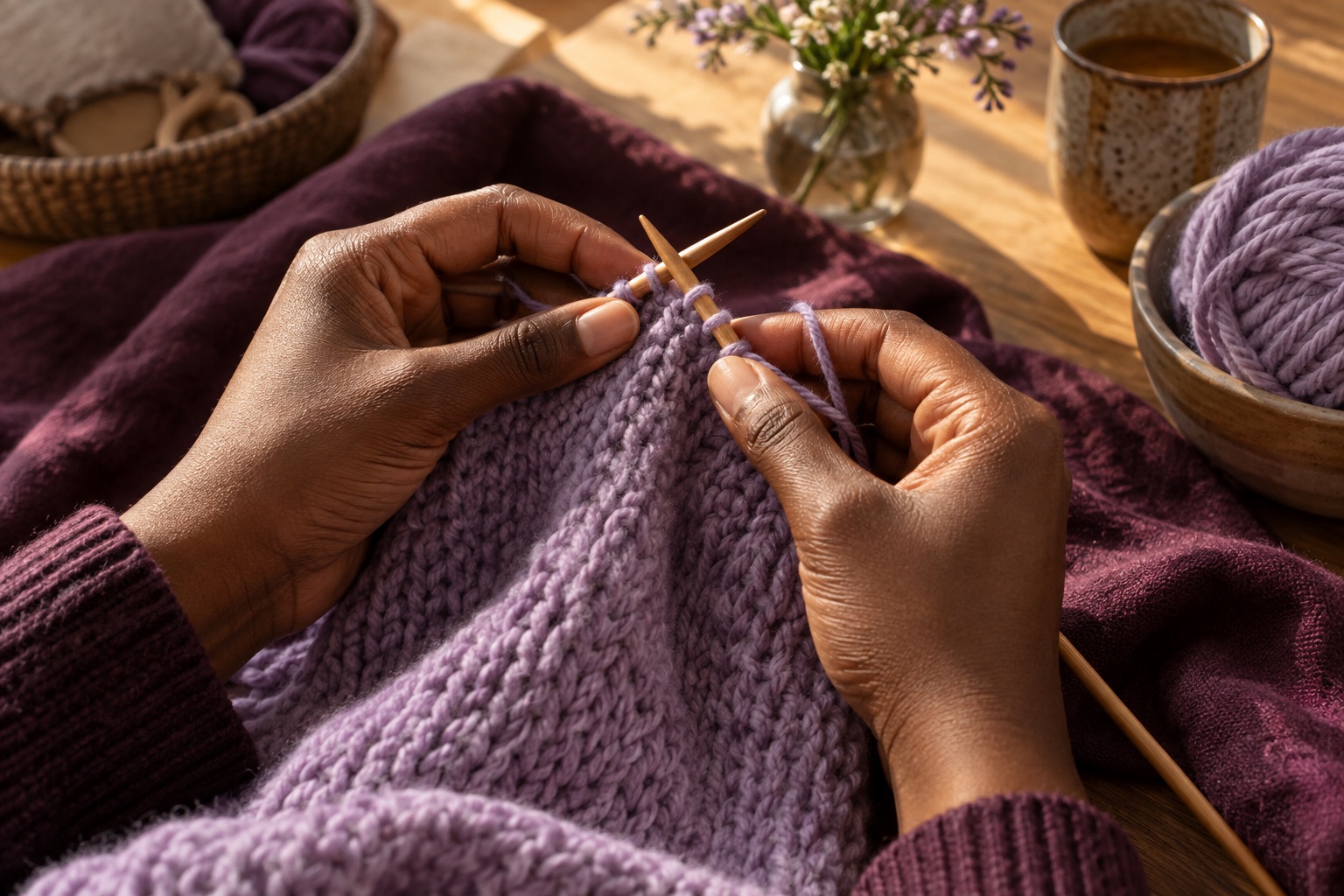
Illustrative image of hands working lavender yarn with wooden knitting needles
AI-generated editorial illustration; not Jasmyne or her work.
Something small.
Something yours.

03 / YOUR FIRST FEW ROWS

Every practice
has a beginning.

A little garter-stitch square is a place to start. It can become a coaster—or simply a first experiment.

Bring a few simple things

Smooth medium-weight yarn · needles in the size suggested on the yarn label · scissors · a tapestry needle.

STEP 01 / 04

Make a little room.

Find a comfortable seat with enough light to see your stitches. Let your shoulders rest. Keep your yarn loose and close by. There’s no need to finish today.

Go gently. Take breaks and stop if your hands hurt. These written steps are an introduction; learning alongside a knitter can help.

BUILD YOUR STITCH VOCABULARY

One small change.
A whole new texture.

Once the knit stitch feels familiar, try its companion: the purl. Then combine the two. These practice patterns are worked flat, turning after each row.

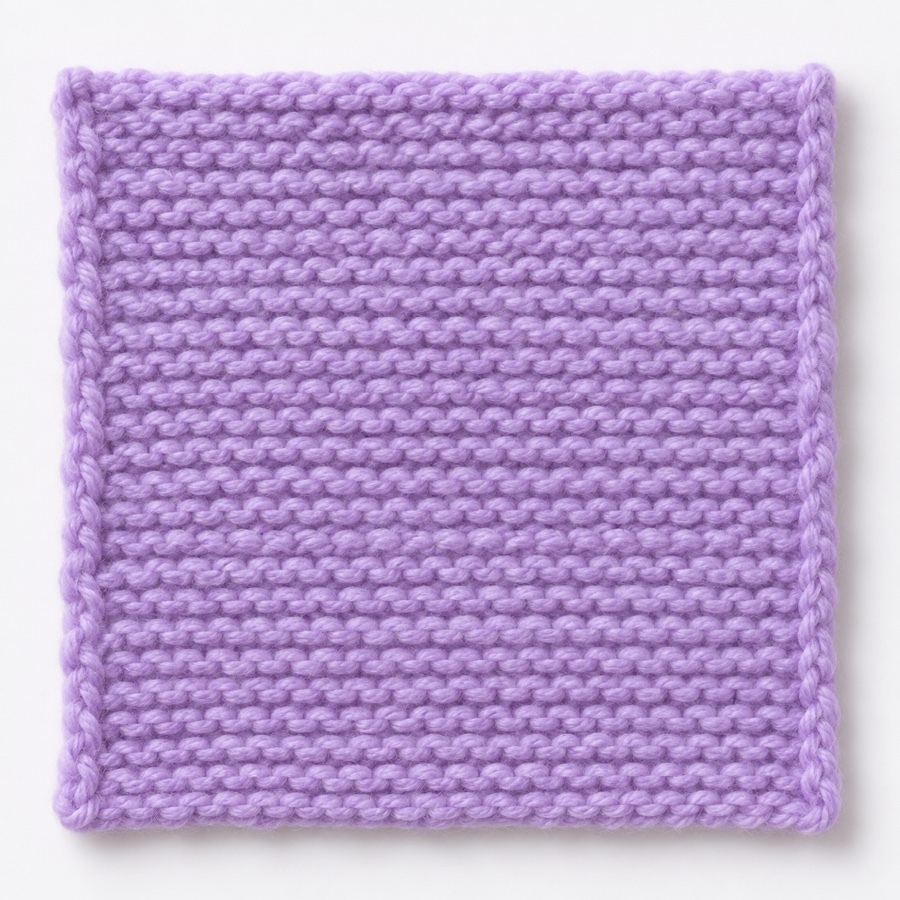
Orchid swatch showing the little horizontal bumps of a purl-facing texture
01 / THE COMPANION STITCH

Purl

Look for the little bump. It is the other face of a knit stitch.

Practice the purl
  1. Begin with your working yarn in front of the needles.
  2. Put the right needle through the front of the next loop, entering from right to left.
  3. Wrap the working yarn counterclockwise around the right needle. Draw that new loop back through the old one, then slide the old loop off the left needle.
  4. Try a short row. Turn and purl the next row to begin a garter-stitch practice swatch.

Texture note: Purling every row makes garter-stitch ridges, illustrated here. A purl is also the reverse face of a knit stitch. Alternating knit rows and purl rows creates stockinette instead.

See the Craft Yarn Council diagrams ↗ (opens in a new tab)
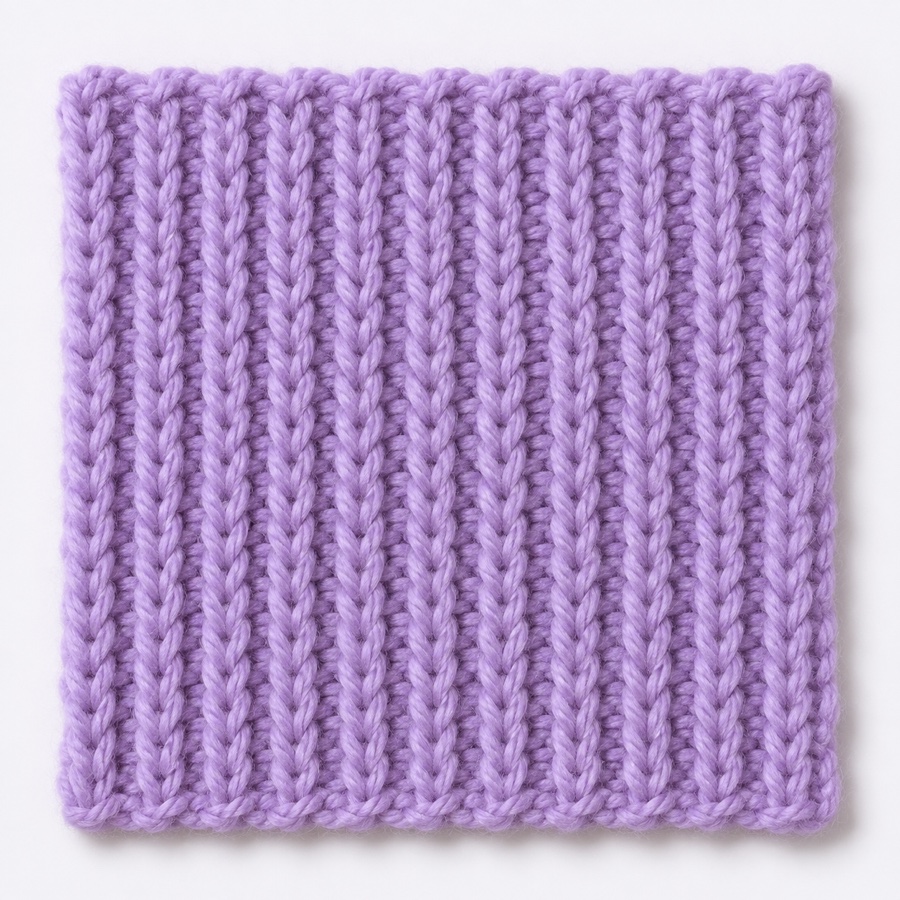
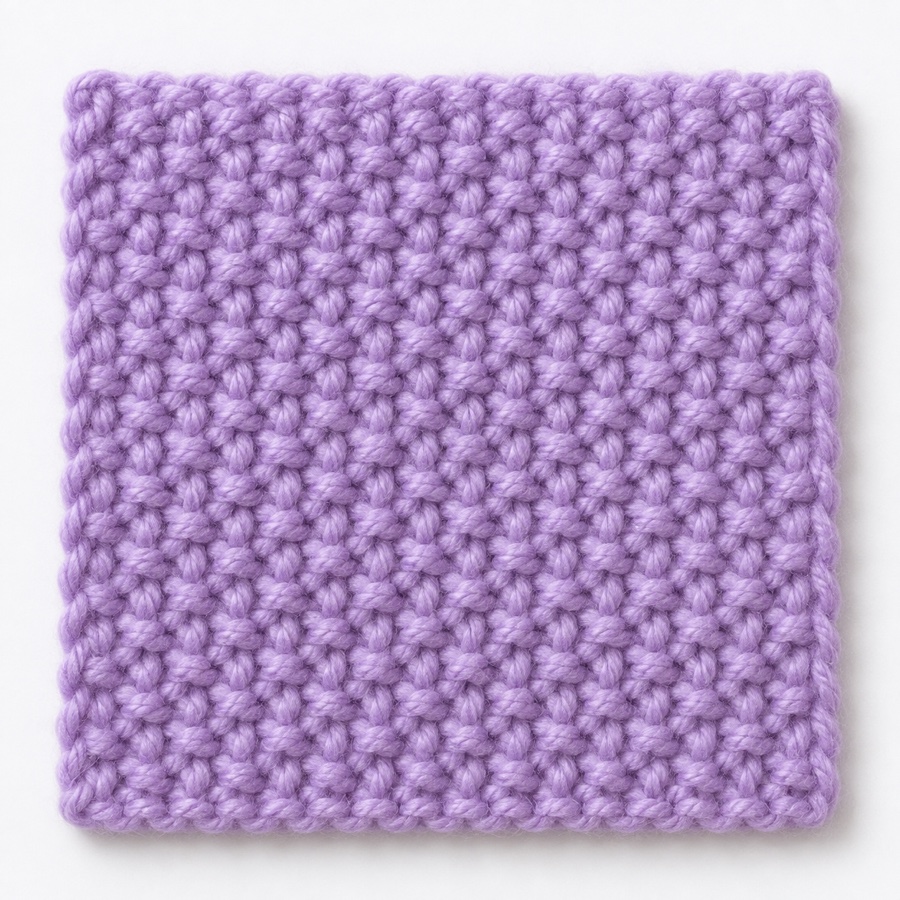
Orchid one-by-one rib swatch with raised knit V columns and recessed purl columns
02 / ALTERNATING COLUMNS

1 × 1 rib

Knit and purl columns sit side by side, creating a gently elastic texture.

Practice the rib
  1. Cast on an even number, such as 12 stitches.
  2. Knit one stitch, then purl one stitch. Repeat that pair to the end of the row.
  3. Turn the work. Again knit one, purl one across the row.
  4. Repeat. As you face the work, knit the stitches that look like a V and purl the ones with a bump.

Keep the count: Move the yarn between the needle tips when switching: back for knit, front for purl. Taking it over a needle can add an unwanted loop.

See how to switch knit and purl ↗ (opens in a new tab)
Orchid seed-stitch swatch with alternating small bumps in a pebbled texture
03 / A LITTLE CONTRAST

Seed stitch

Offset the knit and purl stitches to make a small, pebbled pattern.

Practice seed stitch
  1. Cast on an odd number, such as 13 stitches.
  2. Knit one, purl one, and repeat across the row, ending with knit one.
  3. Turn. Repeat that same row: start and finish with a knit stitch.
  4. The odd stitch count offsets the pattern. As you face the next row, knit the bumps and purl the V-shaped stitches.

If columns appear: Check your stitch count. This version needs an odd number; repeating knit-one/purl-one over an even number produces ribbing.

Review the knit-to-purl movement ↗ (opens in a new tab)

AI-generated swatches illustrate texture; they are not stitch-by-stitch diagrams. Follow the written practice and linked teaching diagrams for needle placement. Instructions describe a common right-handed method.

04 / THE PERSON BEHIND THE PRACTICE

Meet
Jasmyne.

A knitter’s patience.
A researcher’s curiosity.

Jasmyne Lobbins brings a background in neuroscience and clinical research to her interest in how people think, feel, and experience everyday life.

NeuroKnit brings that curiosity into a personal creative practice: making room for care, attention, and the pleasure of making something by hand.

LOOKING TOWARD

Patient-centered neuroscience.
Clinical and academic research.
Thoughtful human connection.

EXPERIENCE, CONNECTED BY CURIOSITY

2025—

Clinical Research Coordinator

Neurology Center of North Orange County

April 2025–present
Good Clinical PracticeInformed consent
2022–24

Technician

Peak Brain Institute

September 2022–January 2024
EEG
2021–22

Research Assistant

UCR Brain Game Center

September 2021–December 2022
ResearchInformed consent
2019–20

Health Scholar

Riverside Community Hospital · COPE Health Scholars

Internship · September 2019–March 2020
Direct patient care
UNIVERSITY OF CALIFORNIA, RIVERSIDE

B.S. Neuroscience

2018–2022

Professional background as provided in September 2026. Organizations listed for context; no endorsement implied.

THERE IS ALWAYS ANOTHER PLACE TO BEGIN.

Pick up a thread.
See where it takes you.

Make a little space